

🧠 Introduction — Why Choosing a Niche Matters
Choosing the right niche is one of the most important decisions you’ll make as a blogger, entrepreneur, or content creator. When you choose a niche, you define your audience, focus your content strategy, and set the foundation for monetization.
The niche you select determines:
⭐ Who your target audience is
⭐ How easily you can create content
⭐ How well you can monetize your blog or business
⭐ How quickly you can grow credibility and authority
Unfortunately, many new bloggers fail at this stage by selecting topics that are too broad or not aligned with a paying audience. That’s why this guide will teach you exactly how to choose a niche effectively, including the “niche within a niche” (NWN) method — a framework to target highly specific, profitable audiences.
📌 What Does “Choosing a Niche” Really Mean?
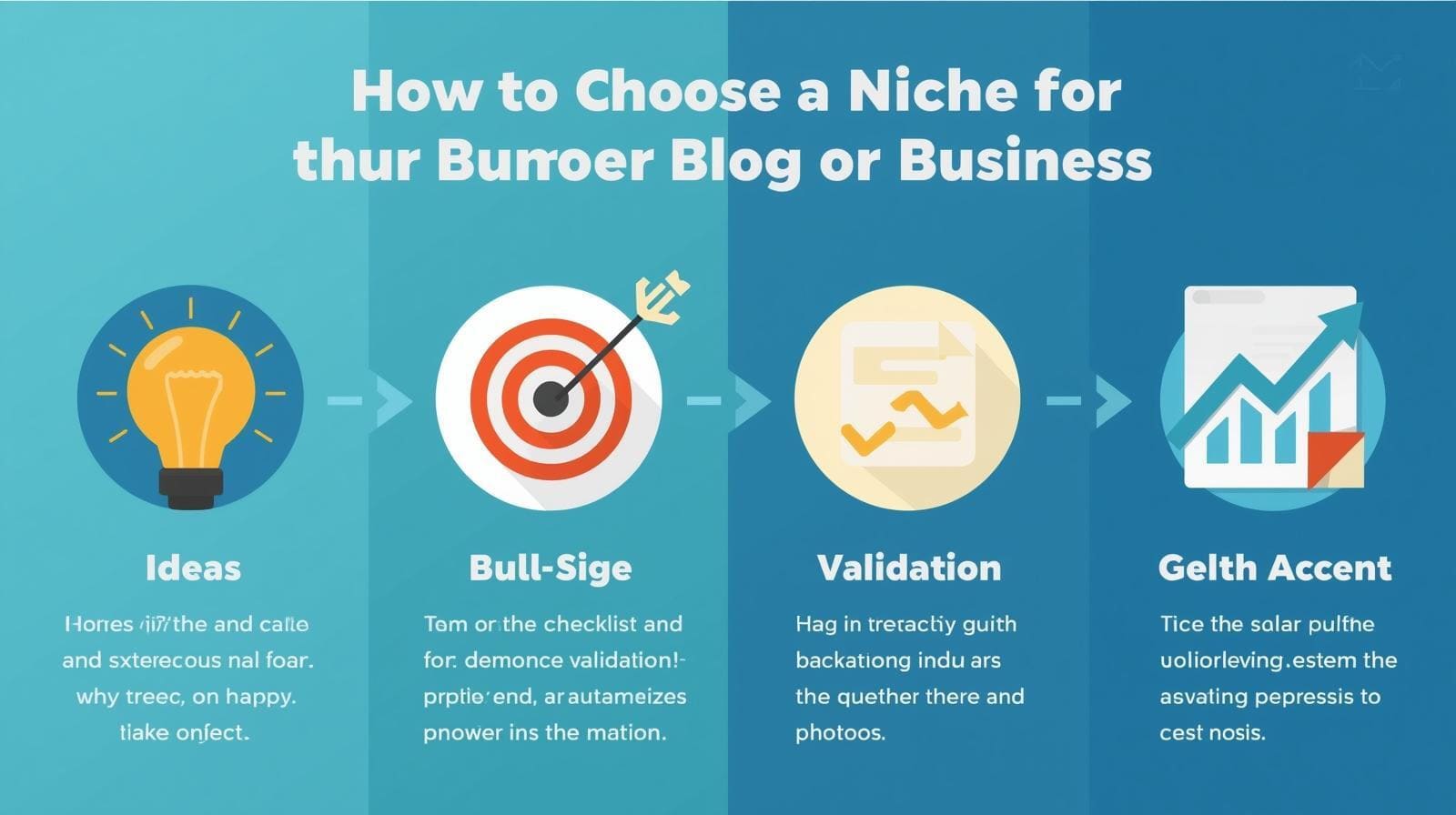
A niche is not just a topic — it’s a clearly defined segment of people who share similar interests, challenges, or needs. Choosing a niche helps you focus your content, attract the right audience, and monetize more effectively.
Examples:
-
Fitness → broad industry
-
Home workout plans for busy moms → niche
-
Kettlebell workouts for postpartum recovery → niche within a niche
This level of specificity allows you to:
✔ Stand out from competitors
✔ Build deeper connections with your audience
✔ Offer highly relevant content and products
By honing in, your blog or business can dominate a small segment of the market before expanding further.
🔎 Step 1 — Start With Your Passions and Interests ❤️
The first step when you choose a niche is to identify what excites you. A niche aligned with your passion ensures you can consistently create content without burning out.
Ask yourself:
-
What do I love talking about for hours?
-
What topics do I research in my free time?
-
Which hobbies or skills could be turned into a blog or online business?
-
Which industry websites or blogs do I follow most?
When you choose a niche based on passion, your content feels authentic. Readers can sense enthusiasm, which builds trust and encourages engagement.
💡 Pro tip: Passion alone isn’t enough — it must be paired with a market that wants your content.
🎯 Step 2 — Pick a Profitable Industry
While passion is essential, your niche should exist in a profitable industry. Some examples of high-demand industries include:
-
Health & Fitness
-
Personal Finance
-
Technology & Software
-
Travel & Lifestyle
-
Home Improvement
-
Education & Online Learning
To confirm profitability, explore tools like Google Trends to see what topics are trending or check Amazon best-seller lists for products people are actively buying. This ensures your niche isn’t just something you enjoy — it’s something your audience will engage with.
💡 Passion + market demand = the ideal starting point when you choose a niche.
🧱 Step 3 — Drill Down With the Niche Within a Niche (NWN) Method
After selecting a broad industry, the next step is to narrow your focus. This is where the Niche Within a Niche (NWN) Method becomes invaluable.
For example:
-
Broad industry: Fitness
-
Narrow niche: Home workouts for busy professionals
-
Niche within a niche: 10-minute kettlebell workouts for postpartum women
The smaller and more specific your niche, the easier it is to attract a dedicated audience. People are more likely to engage with content that feels like it’s made specifically for them.
For detailed guidance, check out Ahrefs’ guide to niche research.
📌 Step 4 — Validate Your Niche
Even if a topic excites you, validation is critical. Ensure that people are searching for your niche and willing to engage.
Questions to ask:
-
Are there existing blogs or websites in this niche?
-
Are products available for this niche?
-
Are there active forums, Subreddits, or Facebook groups?
-
Is the topic discussed on YouTube, TikTok, or Instagram?
Exploring Reddit communities can reveal what real users care about. If your niche has active discussion and products being sold, it indicates genuine demand.
🧩 Step 5 — Analyze Your Competition
Competition can be a positive signal — it shows an active audience. But don’t copy — differentiate.
Check:
-
Blogs covering your niche
-
YouTube channels with similar topics
-
Facebook groups or forums
-
Existing products being sold
Ask: How can I provide more value or a unique perspective? Differentiation is key to standing out in any niche.
📈 Step 6 — Identify Your Content Pillars
Once you choose a niche, define your content pillars — the core topics your blog will cover consistently.
Example: Niche = “Budget travel for digital nomads”
Content pillars:
-
Budget flights ✈️
-
Affordable accommodation 🏡
-
Remote work tools 💻
-
Visa guides 🛂
-
Travel insurance tips 🧾
Structured content pillars make it easier to plan posts, improve SEO, and help readers navigate your site.
💡 Step 7 — Plan Your Monetization Strategy
A profitable niche aligns with a monetization plan. Common strategies include:
-
Affiliate Marketing — promote niche-related products
-
Digital Products — eBooks, courses, templates
-
Services — consulting, coaching, freelancing
-
Sponsored Content — brand partnerships
-
Ad Revenue — display or native ads
Highly targeted audiences often convert better, even if smaller. Make sure your niche supports at least one monetization avenue.
🔄 Step 8 — Test, Iterate, and Refine
Your first niche may evolve. After publishing content:
-
Track page views, clicks, and engagement
-
Identify which posts resonate most
-
Adjust your niche or content strategy as needed
The final, profitable niche often emerges after months of consistent testing and refining.
🤔 Frequently Asked Questions (FAQ)

What does it mean to choose a niche?
A niche is a specific segment of a broader market with shared interests or problems. Choosing a niche helps you focus your content and monetize effectively.
How narrow should my niche be?
Your niche should be specific enough to target a clear audience but broad enough to sustain content creation and traffic. Using the NWN Method helps find this balance.
How do I know if my niche is profitable?
Check keyword search volume, existing products, forums, and competitor success. Tools like Ahrefs and Google Trends help measure demand.
Do I need to be an expert in my niche?
Not necessarily, but you should be passionate and willing to learn. Sharing your journey, experiences, and insights builds trust with your audience.
What if my niche fails?
Analyze analytics and feedback to pivot. Most successful bloggers refine their niche after testing multiple angles and content types.
🌐 External Resources for Deep Dive
Here are a few trusted external resources to help you deepen your niche strategy:
-
🔗 Google Trends —
-
Example in text: “Use Google Trends to identify popular topics and see audience interest over time.”
-
-
🔗 Ahrefs Guide to Niche Research —
-
Example: “Tools like Ahrefs help you validate niche demand with accurate keyword data.”
-
-
🔗 Search Engine Journal (SEO insights) —
-
Example: “For SEO best practices when choosing a niche, check Search Engine Journal.”
-
-
-
Example: “Exploring Reddit communities can show you what real users are interested in within your niche.”
-
📌 Using external industry guides helps boost your credibility and gives your readers more value.
🧠 Conclusion — The Power of Choosing the Right Niche
Choosing a niche is not something you guess — it’s something you research, test, and refine. A well-chosen niche gives you the focus to build strong authority, attract loyal followers, and generate real income.
If you follow the steps above, you’ll be able to:
✔ Identify a niche you love
✔ Confirm there’s audience demand
✔ Create content that resonates
✔ Monetize your efforts strategically
🔗 Continue Learning on AlexWaterandBouw Blog
📌 For even more insights on niche selection, blogging strategy, and online business growth, check out the AlexWaterandBouw Blog:
➡️ Explore all blog posts: AlexWaterandBouw Blog
➡️ SEO & small business strategy article: Best AI Tools for Small Business in 2026 – Affordable & Powerful Solutions — a helpful read if you want to grow your online presence for your niche project.
This article reinforces important concepts like audience understanding, UX design, and how SEO fits into business growth — all relevant to choosing and dominating your niche.